ServicesBank Statement Loans
Bank Statement Loans in Buda
If you work for yourself, your tax return may show far less income than you actually live on. A bank statement loan looks at your real deposits instead. We start by finding out why a standard loan isn't working for you, then build the file that fits.
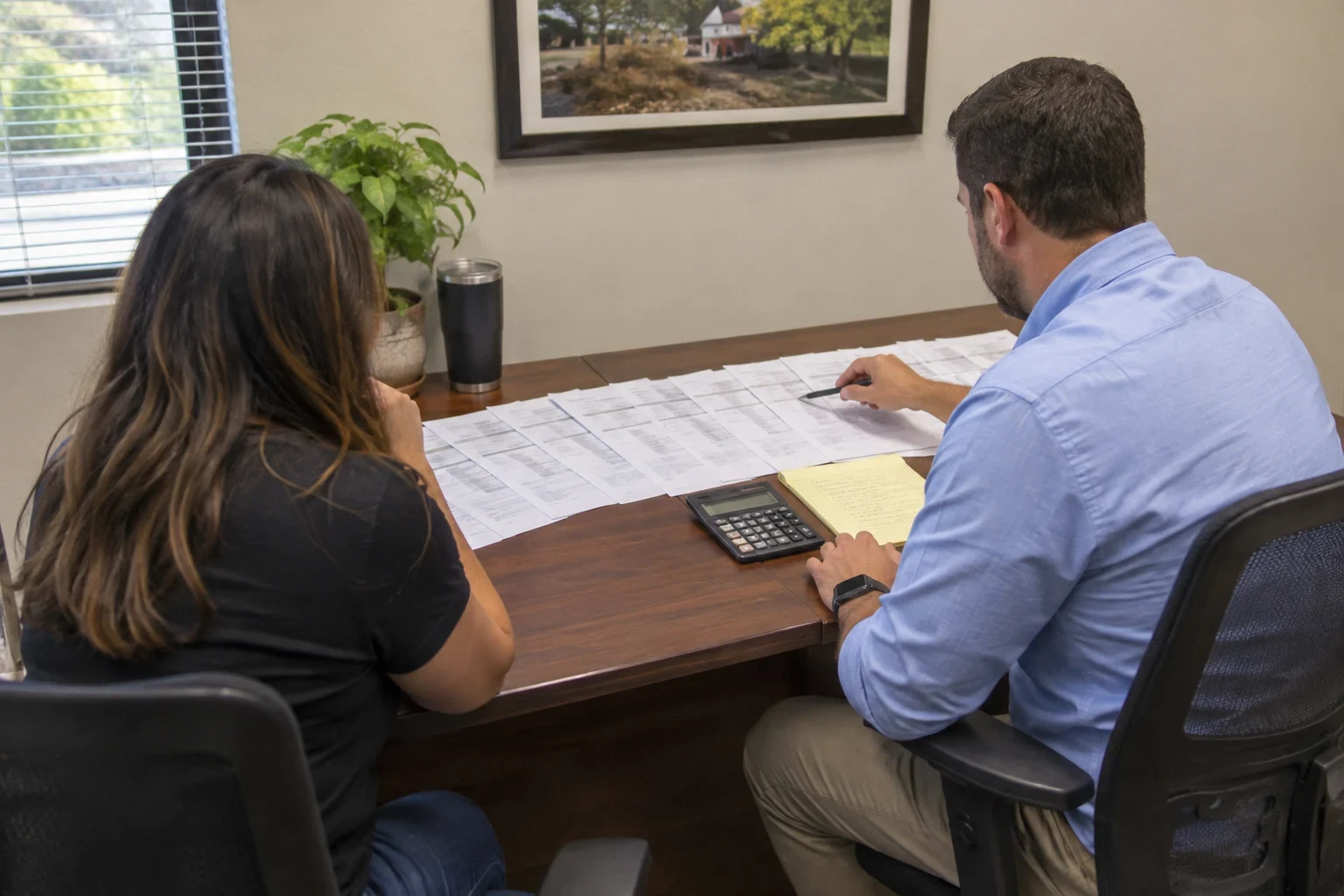
A mortgage that counts income the way your business earns it
Many self-employed borrowers hit the same problem. Deducting the truck, the home office and the equipment lowers your taxes, but it also lowers the income a lender can count. A conventional underwriter works from that smaller figure, and the debt-to-income ratio stops working.
Here, your tax return stays out of the income calculation. The underwriter reviews 12 or 24 months of deposits from your personal or business account, averages them by month and applies an expense factor to reach an earnings number. Because it is a non-qualified mortgage with rules apart from agency loans, plan on a higher rate and a bigger down payment in most cases.
For some borrowers that trade makes sense, and for others it doesn't. Before recommending it, we review your returns, deposits and credit to find what is actually blocking approval. Sometimes that points to a bank statement loan. Sometimes a small fix opens the door to a conventional or FHA loan, and we will tell you so.

What we handle on a bank statement loan
- 01
Income review before anything else
We compare what your tax returns show against what actually lands in your accounts. That gap tells us whether this program is the right fit or whether a standard loan could still work.
- 02
Choosing 12 or 24 months
A strong recent year may favor a 12-month review. If income swings with the seasons or you had a slow stretch, 24 months can smooth the average. We run both and show you the difference.
- 03
Personal vs. business statements
Some borrowers deposit everything into a business account, others mix accounts. We sort out which statements to use and how the expense factor applies to each, so the income figure holds up in underwriting.
- 04
Explaining large or unusual deposits
Transfers between your own accounts, a one-time sale of equipment or a gift from family can all raise questions. We flag them early and help you document each one with a short letter or a paper trail.
- 05
Down payment and reserves planning
These loans usually ask for more cash down and some months of reserves. We walk through where those funds will come from and how they need to be seasoned in your accounts before closing.
Questions about Bank Statement Loans?
Call(512) 312-7947Signs a bank statement loan may be the right fit
Your tax return undersells your income
Healthy write-offs keep your taxable income low. If a lender has told you the numbers don't support the payment you can comfortably afford, this is often why.
You were declined for a conventional loan
A denial on debt-to-income grounds is worth a second look. We review the reason before you apply anywhere else, so you don't stack up credit pulls chasing the wrong program.
You've been self-employed for a couple of years
Most bank statement programs want to see a steady business history, often around two years. Contractors, consultants, realtors, gig workers and small shop owners commonly fit here.
Your income comes in uneven waves
Commission checks, project payments and seasonal work make a pay stub impossible. Averaged deposits capture what you really bring in over time.
You'd rather not wait for next year's return
If this year is clearly stronger than last but your filed return doesn't show it yet, recent statements can reflect your current earnings sooner.
How the process runs, start to closing
- 1
A conversation about how you earn
It starts with a talk with one of our loan officers, at our office or over a phone or video call. We want to hear how your business brings in money, which accounts you use and what property you plan to buy or refinance. No paperwork yet, just a clear picture.
- 2
Statement and credit review
Once we have your statements, we work out qualifying income the way an underwriter would. We also look at credit, debts and down payment funds. If something will cause trouble later, we want to find it now.
- 3
An honest recommendation
We tell you which program fits, what the likely rate range depends on and what you'll need at closing. If a conventional or FHA loan works better, we say so.
- 4
Application and underwriting
We take your application over the phone and send the file to underwriting with the deposit explanations already in place. That cuts down on the back-and-forth requests that slow these loans.
- 5
Closing
Once the loan is approved and the appraisal is in, we coordinate with the title company so you know exactly what to bring and when.
What moves the price of a bank statement loan
Because these loans sit outside agency guidelines, lenders set terms by how much risk they see in each file. That means two self-employed borrowers can be offered quite different rates and fees. These are the pieces that matter most, and we walk through each one with you before you commit so the closing statement holds no surprises.
- Credit score
- A higher score usually earns a better rate and may lower the down payment required. Recent late payments carry more weight than old ones.
- Size of the down payment
- More cash down means less risk for the lender. Moving from the minimum to a larger down payment can noticeably improve your pricing.
- Expense factor applied to deposits
- Business statements are reduced by an expense ratio to estimate profit. A lower documented expense ratio, sometimes supported by a letter from your CPA, can raise your qualifying income.
- Property type and use
- A primary residence usually prices better than a second home or an investment property. Condos and multi-unit buildings can carry their own adjustments.
- Reserves on hand
- Having several months of payments set aside after closing shows stability and can help both approval and pricing.
Bank statement loan questions we often hear
How many months of statements do I need?
Programs typically use 12 or 24 months in a row. We review your deposits and tell you which span produces a stronger, more accurate income number. Bring complete statements rather than summaries, because underwriters read every page.
My business deposits go into my personal account. Can I use it?
In many cases, yes. Personal statements usually count deposits at full value once transfers are taken out, while business statements have an expense deduction applied. If your accounts are mixed, we work out the right approach before you apply.
Is the rate higher than on a conventional loan?
Typically, since these loans sit outside agency guidelines. How much higher depends on your credit, down payment and reserves. Some borrowers refinance into a conventional loan later, once their tax returns reflect their income.
Will I need to hand over tax returns?
Usually not, and that is the reason the program exists. You will generally need to show the business is real and has operated for some time, for example with a business license, a CPA letter or registration records. We send you a short, exact list.
Can I use this loan to buy outside Buda?
Yes. We help borrowers buying in Kyle, San Marcos, Dripping Springs, Wimberley and the surrounding area. The program rules stay the same; only property and appraisal details differ.
Find out what your deposits can qualify you for
Tell us how your business brings in money and we'll show you where your application stands. If a bank statement loan is the right call, we'll get the paperwork started on the same call.